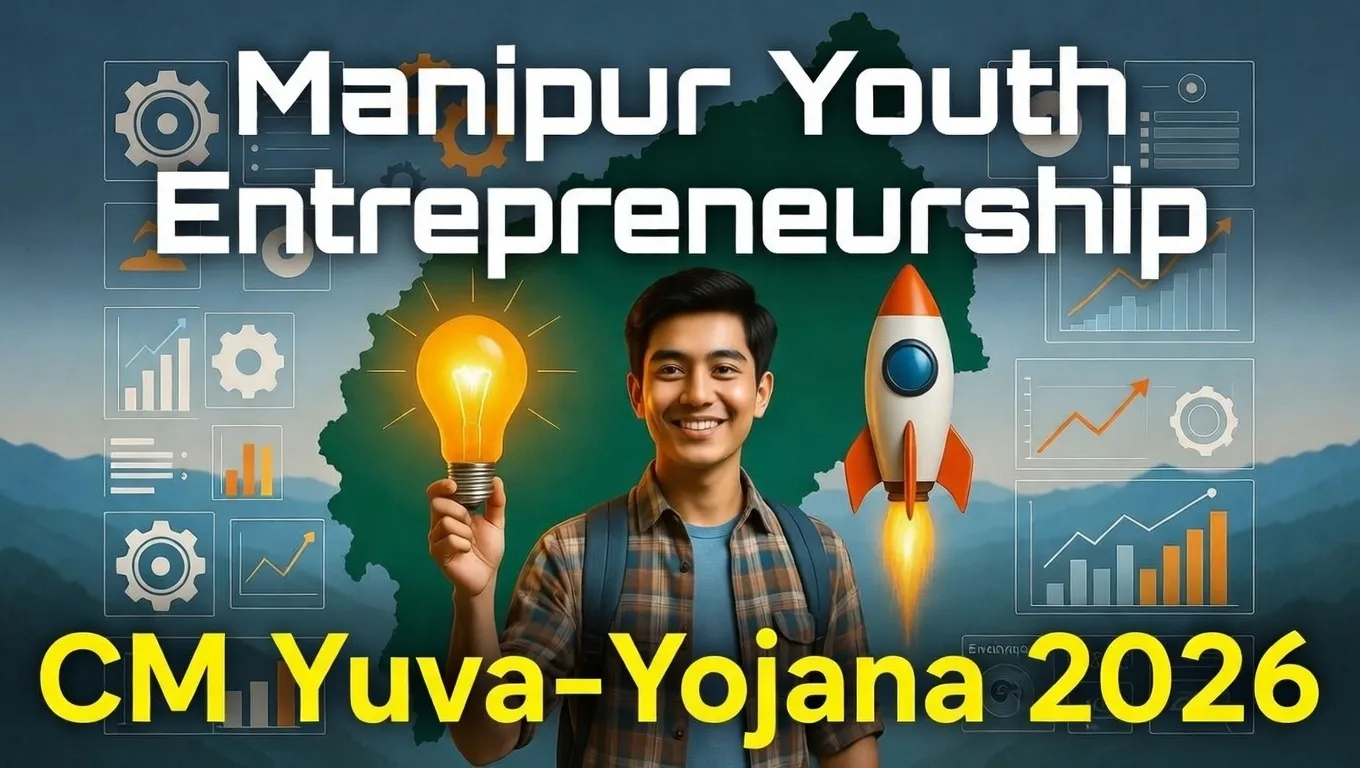
CM Yuva Scheme Manipur: Manipur’s drive to turn young job-seekers into job-creators is entering a more structured, results-oriented phase. While the state does not operate a single portal branded strictly as “CM Yuva Scheme,” its entrepreneurship framework—anchored by the Chief Minister’s Entrepreneurship Support Scheme (CMESS) and the Startup Manipur ecosystem—now mirrors the most progressive youth enterprise models seen across India.
For aspiring entrepreneurs, self-employed professionals, and first-time business founders, the 2026 landscape brings clearer pathways, better training access, and stronger financial linkages. The intent is simple: make it easier for Manipur’s youth to start viable ventures, scale sustainably, and generate local employment.
Here’s what’s new, what remains central, and why this ecosystem matters more than ever.
A More Cohesive Youth Entrepreneurship Framework
Manipur’s youth-focused entrepreneurship programmes have evolved from isolated assistance initiatives into a coordinated support network. Instead of only offering loans or subsidies, the state now emphasizes an end-to-end journey—idea validation, training, incubation, funding facilitation, and post-launch mentoring.
This approach closely resembles the “CM Yuva” or Mukhyamantri Yuva Udyami models running in other states, even if the naming differs locally. The goal is identical: reduce youth unemployment by making entrepreneurship a practical, achievable career path.
What stands out in 2026 is the tighter integration between government departments, incubation centres, financial institutions, and skill-development partners.
What’s New or Improved for 2026
Stronger Incubation and Mentorship Networks
Incubation is no longer limited to a handful of centres. The ecosystem is expanding partnerships with academic institutions, innovation hubs, and industry mentors. Young founders can now access structured mentoring programmes, sector-specific guidance covering agri-business, handloom, food processing, services, digital startups, and MSMEs, and regular review and progress-tracking sessions.
This shift addresses one of the biggest reasons startups fail—lack of early-stage guidance.
Faster Linkage to Financial Institutions
Instead of navigating banks alone, applicants are increasingly routed through nodal agencies that help match business proposals with suitable lending options. This improves approval odds and shortens processing timelines.
Emphasis on Local Value Chains
More focus is being placed on ventures that strengthen Manipur’s local economy—agriculture, horticulture, bamboo products, handicrafts, tourism services, and small manufacturing. Projects tied to local resources often receive priority support.
Skill-to-Business Alignment
Training programmes are being mapped more closely to market demand. Youth who complete recognised skill courses are encouraged to translate those skills directly into enterprise ideas.
Core Objectives That Shape the Programme
The 2026 framework revolves around a few clear goals.
Encourage self-employment and first-generation entrepreneurship.
Create sustainable local jobs.
Build a culture of innovation and risk-taking.
Reduce dependency on government employment.
Promote inclusive growth across urban and rural areas.
Rather than chasing high-growth startups alone, the system supports both small livelihood businesses and scalable ventures.
Financial Support: How It Typically Works
While exact amounts and structures can vary depending on the project and funding partner, the financial assistance model generally includes:
Access to Business Loans
Eligible youth entrepreneurs can apply for business loans through partner banks and financial institutions. These loans are intended for machinery and equipment, raw materials, shop or workspace setup, and working capital.
Subsidy or Margin Money Support
In many cases, a portion of the project cost may be supported through government subsidy or margin assistance, reducing the entrepreneur’s initial burden.
Interest Support in Some Categories
Certain projects may qualify for interest subsidies or concessional rates, depending on prevailing policy guidelines.
The focus is on making credit affordable and accessible, especially for first-time borrowers.
Skill Development and Capacity Building
Money alone does not create successful entrepreneurs. That’s why training remains a cornerstone of the ecosystem.
Entrepreneurship Development Programmes
Participants learn the basics of business planning, costing and pricing, marketing and customer acquisition, accounting and compliance, and digital tools for small businesses.
Sector-Specific Training
From food processing to tailoring, carpentry, IT services, and agri-based enterprises, training is tailored to the chosen business domain.
Continuous Learning
Workshops, bootcamps, and refresher sessions help entrepreneurs adapt as markets change.
Technology and Digital Enablement
The 2026 ecosystem places greater emphasis on digital adoption. This includes online registration and application systems, digital documentation uploads, virtual mentoring sessions, and promotion of digital payments and online marketing.
For young entrepreneurs, this reduces paperwork, speeds up communication, and opens access to wider markets.
Who Is Eligible
While specific conditions can change slightly with updated guidelines, the general framework includes youth typically between 18 and 40 years of age, residents of Manipur, applicants with minimum basic education, preference for candidates with skill training or vocational certification, a feasible business idea or project proposal, and those not already availing major overlapping government enterprise subsidies.
Special focus is often given to women entrepreneurs, SC/ST candidates, and youth from economically weaker sections.
Documents Commonly Required
Applicants are usually asked to submit identity proof, age proof, address proof, educational or skill certificates, a project report or business plan, and bank account details.
Keeping digital copies ready can significantly speed up the process.
Step-by-Step Application Flow
Register on the designated state or startup portal or through a local nodal agency.
Submit personal details and project information.
Upload required documents.
Attend counselling or screening, if called.
Project evaluation by authorities or expert panels.
Forwarding of approved proposals to banks or funding partners.
Disbursement of financial support after formalities.
Applicants are encouraged to stay in touch with district-level MSME or startup cells for guidance.
Why This Matters for Manipur’s Youth
Lower Barrier to Entry
You don’t need large capital or industry connections to begin. Structured support reduces the intimidation factor of starting a business.
Local Opportunities, Local Impact
Most supported ventures are rooted in local needs. This keeps money circulating within the state and strengthens community economies.
Long-Term Career Path
Entrepreneurship is no longer a fallback option. It is increasingly being positioned as a respectable, stable career choice.
Job Creation Beyond the Founder
Each successful small business has the potential to employ others, multiplying the impact.
Sectors Showing Strong Potential
Food processing and packaging.
Organic farming and allied activities.
Handloom and handicrafts.
Tourism services and homestays.
Small manufacturing units.
Repair, maintenance, and service businesses.
Digital services and IT-enabled work.
Entrepreneurs who align their ideas with these sectors often find better support and market acceptance.
Challenges and How the Ecosystem Is Responding
Awareness Gaps
Many eligible youth still don’t know about available support. Outreach through colleges, skill centres, and local bodies is being expanded.
Business Survival Rates
Early-stage mentoring and follow-up support are being strengthened to reduce failure rates.
Market Access
Efforts are underway to connect entrepreneurs with exhibitions, trade fairs, and online marketplaces.
The Big Picture for 2026
Manipur’s CM Yuva–style entrepreneurship ecosystem is moving from concept to execution. The focus is no longer just on launching businesses, but on helping them survive, grow, and contribute meaningfully to the state’s economy.
For young people with a workable idea and the willingness to learn, this is one of the most supportive environments Manipur has offered so far.
Final Word
The 2026 youth entrepreneurship framework in Manipur represents a clear shift—from viewing employment as something to wait for, to something you can create. With training, mentoring, and financial pathways coming together under a single ecosystem, starting a business is no longer an out-of-reach dream.
For many young Manipuris, it may be the most practical route to independence, stability, and long-term growth.